

Design the buyer’s journey first
A 360° tour cannot replace an on-site inspection. It can help buyers understand the flow and proportions of a home before arranging a viewing. Map the entry, living area, kitchen, bedrooms, bathrooms and outdoor spaces. Connect viewpoints in the order a person would naturally move through the property. Visitors should always know where they are and how to return to the previous room.
Capture clean, consistent panoramas
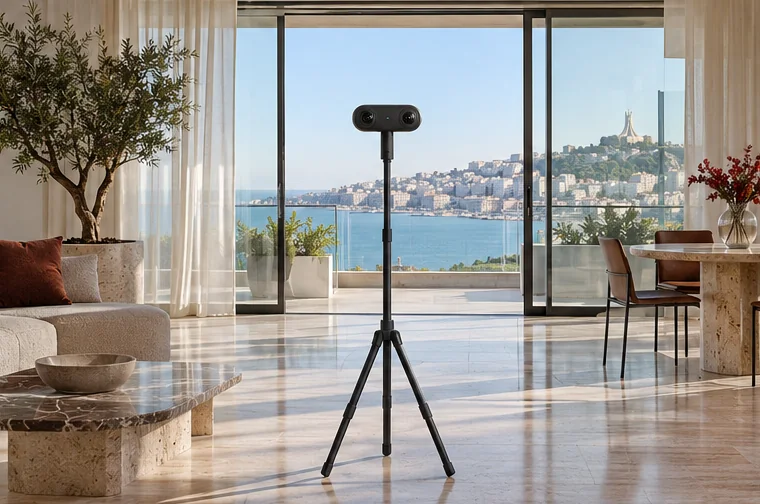
A 360° camera typically produces a 2:1 equirectangular image. Position it near eye level and away from walls, then keep exposure consistent between rooms. Remove private documents and people from the frame. Ordinary photos may sometimes be stitched, but perspective and seams need careful inspection. Turning a standard picture into a panorama does not automatically recreate an accurate room.
Make the experience fast
Compress media without losing important details. Load the first room first, then bring in additional rooms as needed. Use restrained navigation hotspots, readable labels and a clear viewing-request action. Test touch gestures on phones, keyboard controls on desktop and slow connections. Avoid constant automatic spinning: it can make an otherwise elegant experience feel difficult to control.
Track meaningful outcomes
Measure tour opens, room transitions and, most importantly, inquiries that follow. Compare with similar listings carefully because traffic quality and property type affect results. Ask the agency to verify every room and specification before publishing. The goal is to make early qualification easier, not to disguise a property’s limitations.
What matters most
- Map the room sequence before capture
- Validate imagery against the actual property
- Keep a human viewing request one tap away