

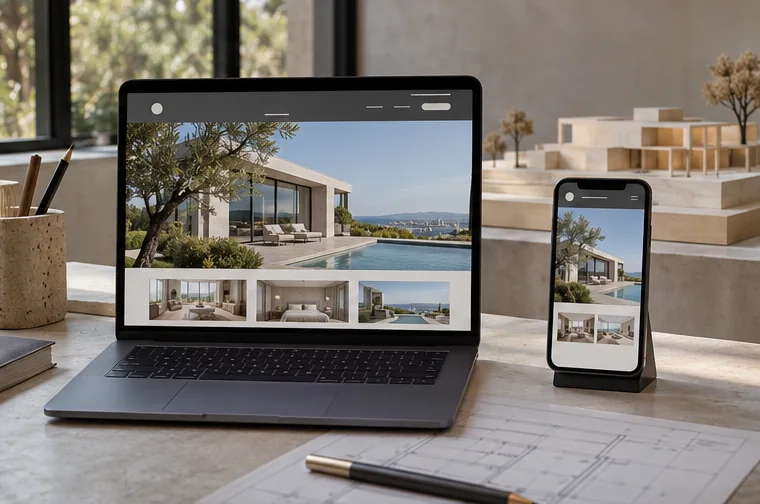
Design around three core tasks
Visitors generally want to find a property, decide whether it fits and contact a real person. Put these actions ahead of decorative interface patterns. Menus should expose property types and locations directly. Price, availability and images belong near the top of each listing, without unnecessary clicks or overlays.
Make every listing complete
Keep a reference, publishable area, dimensions, rooms, relevant features, ordered photography and contact conditions together. Do not display unverified specifications. Maps help when a location can be shared, but seller privacy may require a general area instead of a precise address.
Prioritise performance and access
Resize images, avoid heavy animation on initial load and reserve layout space to prevent jumps. Label forms clearly and support keyboard navigation. Test on a small phone, a modest connection and with reduced-motion settings. High-end animation should support property discovery, never block it.
Plan everyday content operations
Decide who changes prices, archives unavailable homes and answers inquiries. Without an ownership process, listings quickly become misleading. Define what happens to sold or rented listing URLs and set redirects for changed addresses. The admin workflow should save the sales team time.
What matters most
- Smooth search-to-inquiry journey
- Accessible mobile forms and fast images
- Clear listing ownership and updates